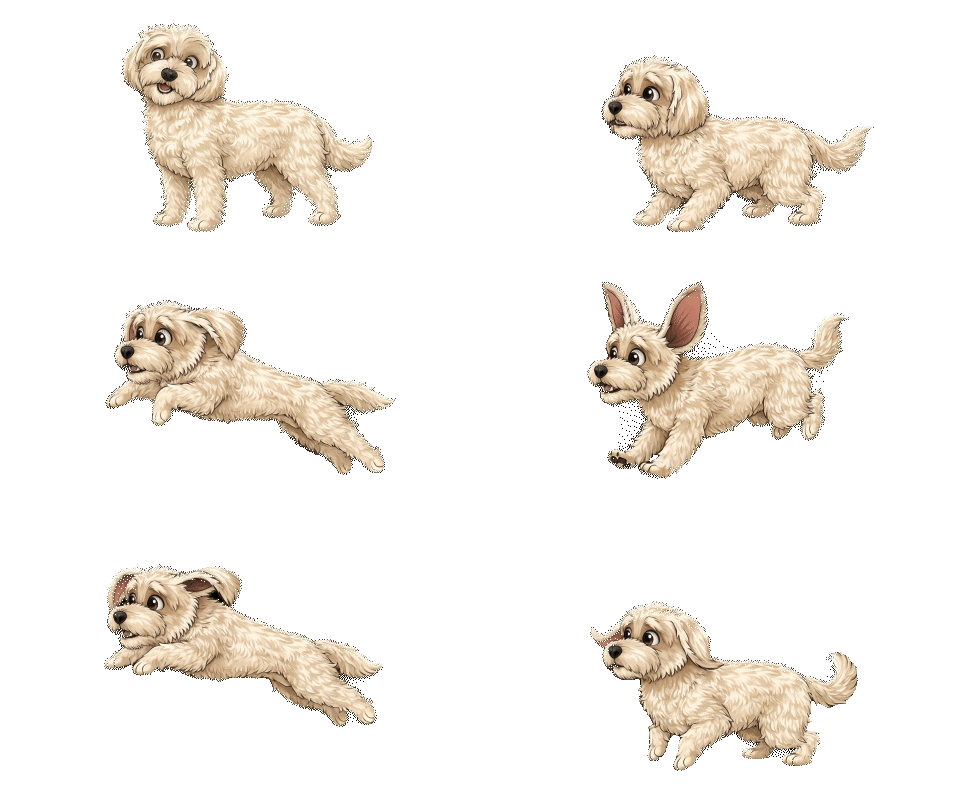
Teaching kids resilience means helping them keep going after something hard, scary or disappointing, and recover with their confidence intact. Children build it a little at a time, through everyday moments and the adults who respond to them. Stories help, because a child can practice courage on a character before trying it in real life. Below are seven lessons from the Runty Ralph books, plus activities and other picture books about perseverance you can try at home or in the classroom.
I’m a children’s author and a dog mom, not a child psychologist. What I can offer is the story that started it all: Runty Ralph was born stillborn on a cold winter night in Arizona and survived, and his journey is a good place to begin a conversation about never giving up. If you’d like the full backstory, read the true story behind Runty Ralph.
What resilience looks like in young children
Resilience in a small child rarely looks like a grand gesture. It looks like trying the zipper again after the third failed attempt, walking into a classroom after a rough morning, or asking a friend to play after being left out.
A few signs you may see:
- They get upset, then settle and try again.
- They ask for help instead of giving up or melting down.
- They talk about a hard moment afterward instead of hiding it.
- They try something new even though it feels scary.
Resilient kids still feel sad, frustrated and afraid. The difference is that those feelings don’t have the final word. Researchers who study child development consistently point to one ingredient above the rest: a steady, caring relationship with at least one adult. That is good news, because it means a parent, grandparent or teacher reading a picture book aloud is already doing real work.
7 resilience lessons from the Runty Ralph series
The lessons below grow out of the themes in the books: courage, friendship, belonging and self-belief. In Runty Ralph: How I Got My Name, we meet a puppy whose life began against the odds. In Runty Ralph Visits the Big Dogs, Runty Ralph is told he’s too small to join the adventure, and with his loyal friend Grace beside him he steps into a world of new friends and a few scary moments.
1. Being small isn’t being less
Every child hears, in some form, that they’re too young, too short, too slow or too new. Runty Ralph hears it too, and the books refuse to let size decide his worth.
At home: Notice the moments your child feels left out for being little, and say plainly that size and ability are not the same thing. Point out what they can do that bigger kids can’t, like fitting into the fort or noticing the tiny details.
2. Asking for help is brave
Many children believe that needing help means they’ve failed. Runty Ralph’s story shows the opposite: nobody gets through the hard parts completely alone, and his bond with the people and friends around him is part of why he thrives.
At home: Praise the asking. “I saw you tell me when the puzzle got hard. That took courage.” Let your child watch you ask for help too.
3. Friendship builds confidence
In the second book, Runty Ralph doesn’t face the big dogs alone. Grace is with him, and a loyal friend makes a scary place feel possible.
At home: Talk about what makes someone a good friend, and about how it feels to have one nearby when something is hard. Invite your child to be that friend for someone else, too.
4. Fear and courage live side by side
Courage isn’t the absence of fear. Runty Ralph steps into a world that includes scary moments, and he goes anyway. That’s the version of bravery kids can actually use, because they will feel fear.
At home: Give fear a name before trying to fix it. “You’re nervous about the first day, and you can still do it.” Then break the step into something small enough to try.
5. Mistakes are part of the adventure
Any adventure includes wrong turns. Children who treat each mistake as proof they’re no good tend to stop trying; children who treat it as information tend to keep going.
At home: React to mistakes with curiosity. Ask, “What did you learn?” and “What could we try next?” Share your own: the burnt dinner, the missed turn, the email you sent too fast.
6. Kindness is strength
Strength in these stories isn’t about being the loudest or the biggest. It shows up in how Runty Ralph treats others and in the love at the center of his story. Kids who see kindness as strong have an easier time standing up for themselves and for others without becoming unkind.
At home: Catch your child being kind and name it as strength. Talk about how a gentle response can take more courage than a harsh one.
7. “Never give up”, and how to apply it at home
Runty Ralph’s motto is “Never give up!” and it works best when children understand it as “keep trying, and get support while you do,” not “never stop, no matter what.”
At home: Pick one thing your child finds hard right now, such as tying shoes, reading a tricky word or learning to ride a bike, and track small wins in place of the finish line. Celebrate “you kept going” as loudly as “you did it.”
Activities to try after reading
A book opens the door. These short activities help children walk through it. Each takes about 10 to 15 minutes.
Draw your brave moment: Ask your child to draw a time they felt scared and did something anyway. Let them add a caption or tell you the story while you write it down. Hang it where they can see it.
Role-play the hard moment: Act out a situation your child finds tough, such as joining a group at recess or asking a teacher a question. Take turns playing each part. Practicing the words in a safe space makes the real moment less frightening.
Keep a “brave moment” journal: Once a day or a few times a week, write or draw one thing your child tried, even if it didn’t work out. Younger children can dictate while you write. Over time, the pages become proof of how much they’ve done.
Play “Runty Ralph size challenge”: Choose one small challenge together, like a new food, a new playground slide, or saying hello to someone new. Afterward, ask, “How big did that feel? How big do you feel now?”
Read a question card together. Use these questions after any Runty Ralph book, or any story:
- What made the character feel small? What made him feel brave?
- Who helped when things got hard?
- Was there a moment he wanted to quit? What happened next?
- When have you felt like that? What helped you?
- What would you say to a friend who felt that way?
Picture books about perseverance worth adding to your shelf
No single book carries a child’s whole sense of resilience. A small shelf of stories, read again and again, works better. Alongside the Runty Ralph books, these are widely loved titles about trying, failing and trying again:
| Book | Author | Why it fits |
| The Little Engine That Could | Watty Piper | A classic about believing you can, even when the hill looks steep |
| The Most Magnificent Thing | Ashley Spires | A frustrated young inventor learns to keep going after things go wrong |
| Beautiful Oops! | Barney Saltzberg | Turns mistakes into new ideas, with flaps and pop-ups to explore |
| Giraffes Can’t Dance | Giles Andreae | A gentle story about finding your own way to move through the world |
| Rosie Revere, Engineer | Andrea Beaty | Shows that failed attempts are part of making something great |
| Jabari Jumps | Gaia Cornwall | A child talks himself through fear at the top of the diving board |
The Runty Ralph books pair well with these because they come from a true story about a real puppy. Start with Runty Ralph: How I Got My Name, continue with Runty Ralph Visits the Big Dogs, and when your child is ready to talk about unkind behavior, try Runty Ralph Meets a Bully at the Dog Park. You’ll find all three on the Runty Ralph books page.
Frequently asked questions
At what age can kids understand resilience?
Children start practicing resilience as toddlers, every time they fall, get up and try again. They can begin to talk about it around preschool age, usually through stories and simple words like “brave,” “try again” and “help.” You don’t need to use the word “resilience.” Stories about a character who struggles and keeps going give younger children the idea long before they can explain it. Older children can handle more abstract conversations about setbacks, effort and recovery.
How do I praise effort over results?
Describe what your child did instead of rating who they are. “You kept trying even when it was hard” lands better than “You’re so smart” or “You’re the best.” Name the specific action: the strategy they tried, the help they asked for, the time they went back after a mistake. Children learn that effort and approach are what they control, which makes it easier to try again after a miss.
What if my child gives up quickly?
Shrink the task. Break a big challenge into a step small enough to succeed at, then build from there. Stay nearby, stay calm, and acknowledge the frustration before offering help. Quitting is often a sign that a task is too big right now, not that a child lacks grit.
Are the Runty Ralph books based on a true story?
Yes. Runty Ralph is a real puppy who was born stillborn on a cold winter night in Arizona and survived. The books are inspired by his story. Read more in the true story behind Runty Ralph.
